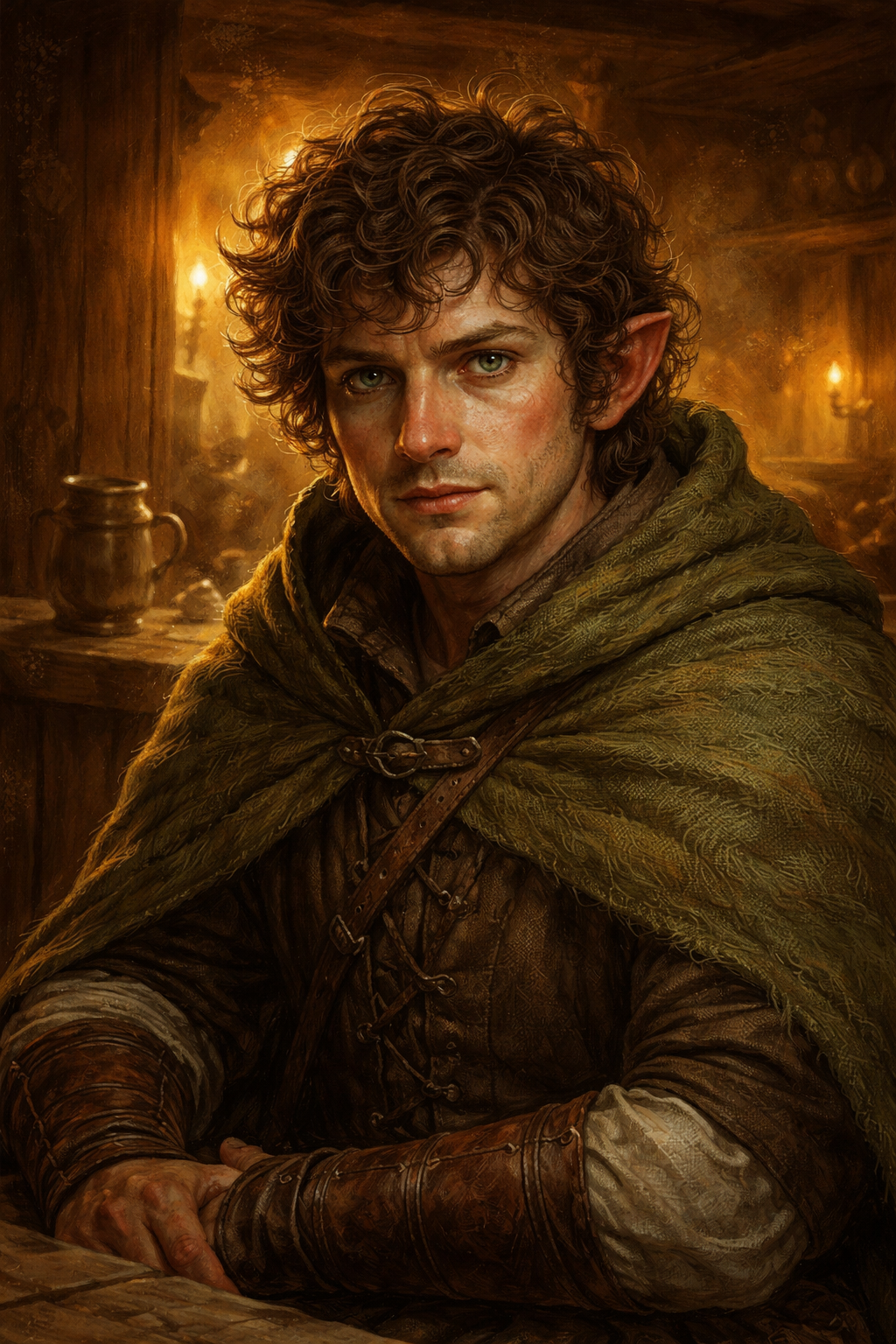

Chapter Three
The Ghost of Hommlet
They made their arrangements in the lane itself. Miller counted out the first six gold pieces into Bramble’s hand.
Without hesitation Bramble redistributed them: one each to Garric, Meret, and Corvin; two set aside as a party fund; one retained for himself.
“That’s fair,” Garric said.
“Shared work, shared pay, shared reserve,” Meret agreed.
“Efficient, equitable, and disappointingly responsible,” Corvin muttered.
The traders read the gesture for what it was. A company that could split coin without argument in the road was less likely to collapse when the brush started moving.
Bramble chose to scout ahead. Garric walked the forward line of the wagon’s protection. Meret and Corvin stayed where they could support the center and rear. Then the cart rolled out of Hommlet and the roads of caution gave way to the roads that cause it.
The track toward the old moathouse was poorer than the village lanes and less maintained than the main road, more worn into the land than built upon it. The country roughened. Brush thickened. The ease of human order thinned at the edges.
Bramble moved ahead quietly, reading the road, the ground, the spaces where movement should have left less of itself.
At first all he found was unease and signs of intermittent traffic. Then he saw the brush off the road disturbed in a way that did not belong to wind or animal habit. He let the wagon draw nearer before he angled off to inspect it more closely.
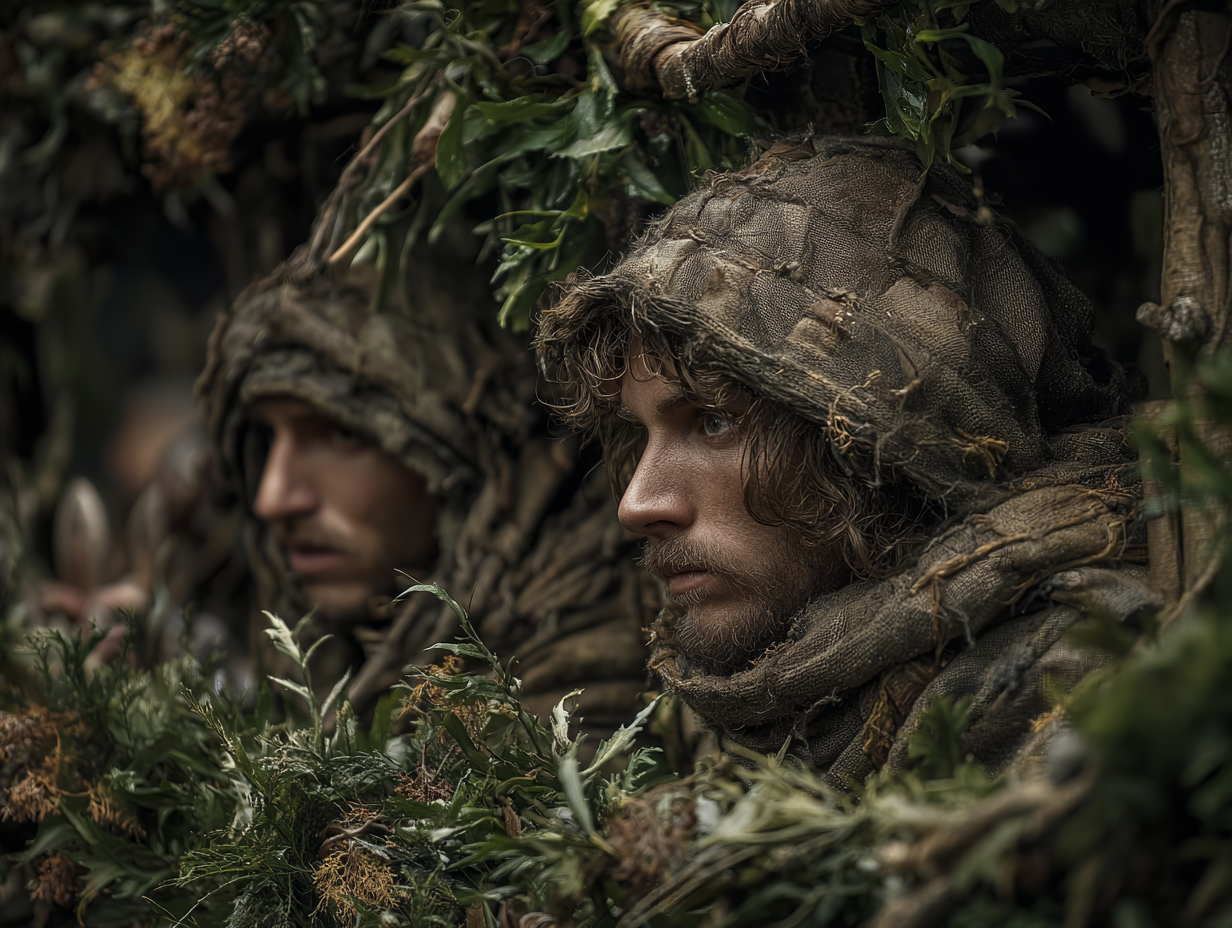
The sign was recent enough to matter. At least two human-sized creatures had moved through that brush with intent, not merely to travel but to watch the track or to spring from it quickly if they chose.
He took cover and waited.
The hide was good. The waiting was harder.
Soon enough he caught what the road had been hiding: a patch of brush ahead and off to one side held itself too carefully. Something was there. Maybe more than one thing. The wagon was close enough now that help would be near if needed.
Bramble slipped closer through cover, keeping low, making the distance shorter. From there he saw them properly: two men in the brush, badly equipped and tense. One with a club or short heavy weapon. One with a longer spear or staff. Not soldiers. Not hunters. Men waiting for a cart.
He held one heartbeat longer and was rewarded with words.
“Not yet,” one hissed. “Let the cart come even.”
The second voice answered, harsher. “There’s more of ’em than he said.”
That mattered.
The first voice again: “Doesn’t matter. Take the drivers first. Quick in, quick out.”
That settled the question of intent.
Bramble came out of the brush like a released blade.
The man with the longer weapon barely turned before the rapier found him under the arm. He let out a short, shocked grunt and staggered into the brush, blood darkening his clothes.
The second man wheeled on Bramble in pure surprise and fury. His club came in hard and ugly, catching Bramble across the side with enough force to flash white pain through him.
Bramble hissed through his teeth but did not give ground. The spearman was still trying to recover, still dangerous if left breathing. Bramble lunged again and drove the rapier home cleanly. The man collapsed into the brush and did not rise.
The survivor saw it happen from only a few feet away.
Bramble leveled the rapier at him, blood on his side and the fallen man between them.
“Surrender now or face the same fate.”
The club lowered first. Then the man’s shoulders.
“All right! All right! Don’t stick me. I’m done. I’m done.”
Garric burst through the brush a moment later with sword in hand. “On your knees.”
The man obeyed at once.
By then Meret was there as well, eyes taking in the blood at Bramble’s side in a single glance.
“Hold still,” she said, and laid hands on him.
Warmth moved through the bruise and split ache like sunlight working into winter ground. Bramble breathed again without the pain clawing him for it.
He lowered the rapier and pointed to the surrendered thief. “Take the lead here. Escort him to the wagon for questioning in front of the rest. He said enough for me to know they knew we were coming.”
That stopped everyone.
“They knew?” Meret asked sharply.
Bramble gave the quick version. “‘There’s more of ’em than he said.’ They planned to take the drivers first.”
Corvin went still. “That is not roadside improvisation.”
Miller, by the wagon, looked suddenly much less like a trader and much more like a man mentally reviewing everyone who could have known his business.
Garric nodded once. “We’ll hold him. You check the ground.”
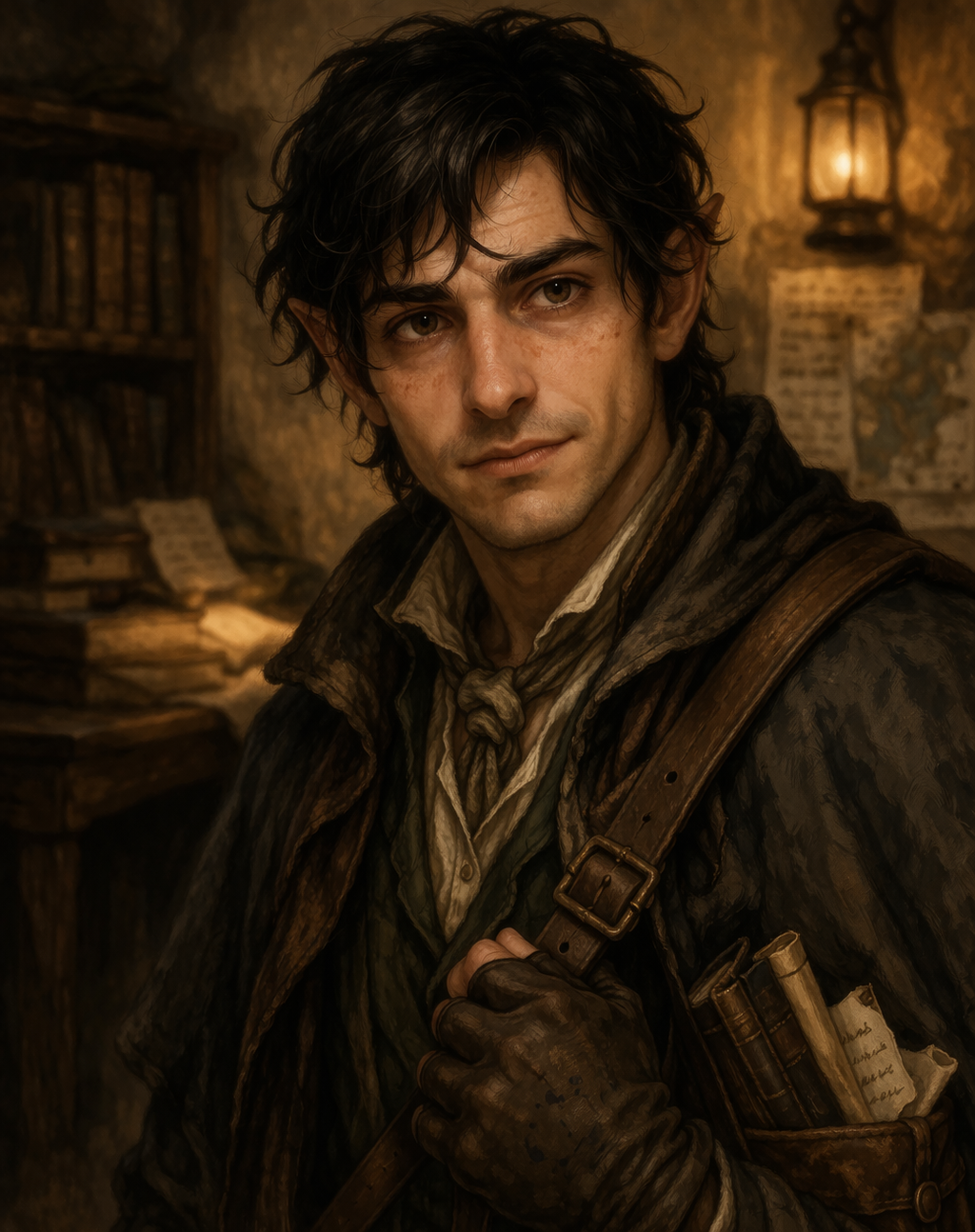
So Bramble searched the dead man and the brush while the others brought the prisoner back. The corpse yielded little of value: a cheap belt knife, a few coppers, and a strip of dark, faded cloth tied around the wrist, crude enough to look personal rather than official. The surrounding brush, however, gave more. No reinforcements. No immediate second line waiting to spring. But there had been a third set of tracks farther back. Older than the ambushers’ final position, not ancient, and deliberate enough to matter.
By the time Bramble returned to the wagon, the surviving thief was on his knees, wrists bound behind him.
“Nothing worth note on the man,” Bramble said. “Did see some tracks where there was a third.”
He fixed the prisoner with a steady look. “Who was he?”
The man’s eyes flicked toward the brush where his companion lay and then away. At first he said nothing. Garric shifted his weight just enough to remind him how little room remained in his life for stubbornness.
“Rell,” the thief muttered. “Name was Rell.”
“And the third?” Corvin asked.
The prisoner looked up sharply at that. Too sharply. He had not expected the question to come so fast.
Meret stepped half a pace closer. “You are in a poor position to become selective.”
“I don’t know his real name,” the prisoner said. “He’s just… the one who said there’d be a wagon.”
Miller’s face hardened. “Who?”
“I don’t know! Not proper. He met us off the road. Said there’d be a trader’s cart worth taking. Said it’d be light.” He shot Bramble a bitter look. “He didn’t say there’d be four armed guards and a ghost with a rapier.”
It was the first time anyone had said it.
The line landed in the silence like something that had chosen its own shape and would not be talked back into a lesser one.
Corvin’s brows went up. Garric gave Bramble a glance too brief to be a smile but too pointed to be nothing. Meret, of all of them, seemed the least surprised. As if of course the world would start naming people while they were still in the middle of becoming themselves.
Bramble let the title pass unclaimed. For the moment.
“Where exactly were you supposed to take the goods?” he asked.
The prisoner answered faster than a liar likes to. “Off the road. Into the brush first. Then south by the old stones.”
“Old stones?” Corvin repeated.
“There’s a spot. Broken markers. Half sunk. We were told to bring whatever we took there and leave it for pickup.”
Miller stared at him. “You weren’t taking it for yourselves.”
“Not all of it, no.”
The answers came quicker after that. They had not meant to steal the wagon itself. A stolen cart was loud, slow, and memorable. Missing sacks or crates looked like ordinary road theft. Goods would be stripped, carried off the road, and moved onward in smaller loads where wagons would only leave evidence. The old stones were close enough for a short carry and hidden enough that a passing traveler would see nothing if he did not know where to look.
Bramble listened until the shape of the thing was clear enough to think on, then turned to Miller and Joran.
“What would you think of using the goods as bait at the stones? If this is bigger than two men in brush, maybe we don’t just survive it. Maybe we draw the rest out and make the road safer.”
Joran looked at him as if he had suggested setting fire to the wagon for luck.
Miller went still. “That is not the thought of a caravan guard. That is the thought of someone who means to cut rot out at the root.”
Joran said, “With our goods?”
“With our goods still in our sight, if at all,” Miller snapped.
Meret folded her arms. “Dangerous. Not foolish.”
“If we do it,” Garric said, “we do it controlled. No actual surrender of the wagon. No drifting into their ground blind.”
Corvin added, “And preferably with a clear distinction between bait and idiocy, which adventuring companies often fail to maintain.”
The prisoner on his knees had gone pale.
Bramble saw the whole of the plan at once. “Load him up with the cheapest goods and not enough room left to carry a weapon. Garric can be made to look like old Rell reasonably enough. He can carry a little but keep his sword handy. The other two can be hidden inside the wagon, and the owners stay here with the body and the most valuable rest of the load.” He gave a sly smile. “The ghost can do what ghosts do, I guess.”
That won him his first real smile from Corvin all day.
Meret narrowed her eyes. “Say it again cleanly.”
So Bramble did. By the time he finished, the shape of the trap stood solid enough to touch.
Garric would pass at a glance for the dead ambusher if distance and hood did enough of the work. The prisoner would carry the cheap bait under threat. Meret and Corvin would hide with the wagon. Miller and Joran would remain back with the body and the better portion of the cargo. Bramble, once more, would disappear.
“And him?” Bramble said, looking at the prisoner. “He gets one chance to live. When steel comes out, he runs. If he warns them, he dies. If he stays to fight, he dies.”
The prisoner went the color of old flour.
“That is harsh,” Meret said. “And clear.”
“Which,” said Corvin, “is usually the better kind of harsh.”
Miller exhaled through his nose. “Then we commit properly or not at all.”
✦
The old stones lay where bad intentions would choose to meet: half-sunk, weathered, easy to miss unless one had reason not to. They sat just far enough off the road to hide a transfer and just close enough to make one practical.
The trap took shape there with the quiet urgency that makes men feel clever and mortal at the same time. Cheap goods were set where they could be seen. The prisoner was loaded and frightened into cooperation. Garric dirtied himself into the part and kept his answers to silence and grunts. Meret and Corvin disappeared with the wagon. Miller and Joran stayed back with the better goods and their nerves. Bramble slipped into cover and let the earth remember him instead of the air.
The waiting stretched.
Then a single figure approached from the south side of the stones, cloaked and careful, taking the path of a man who trusted very little and still meant to come.
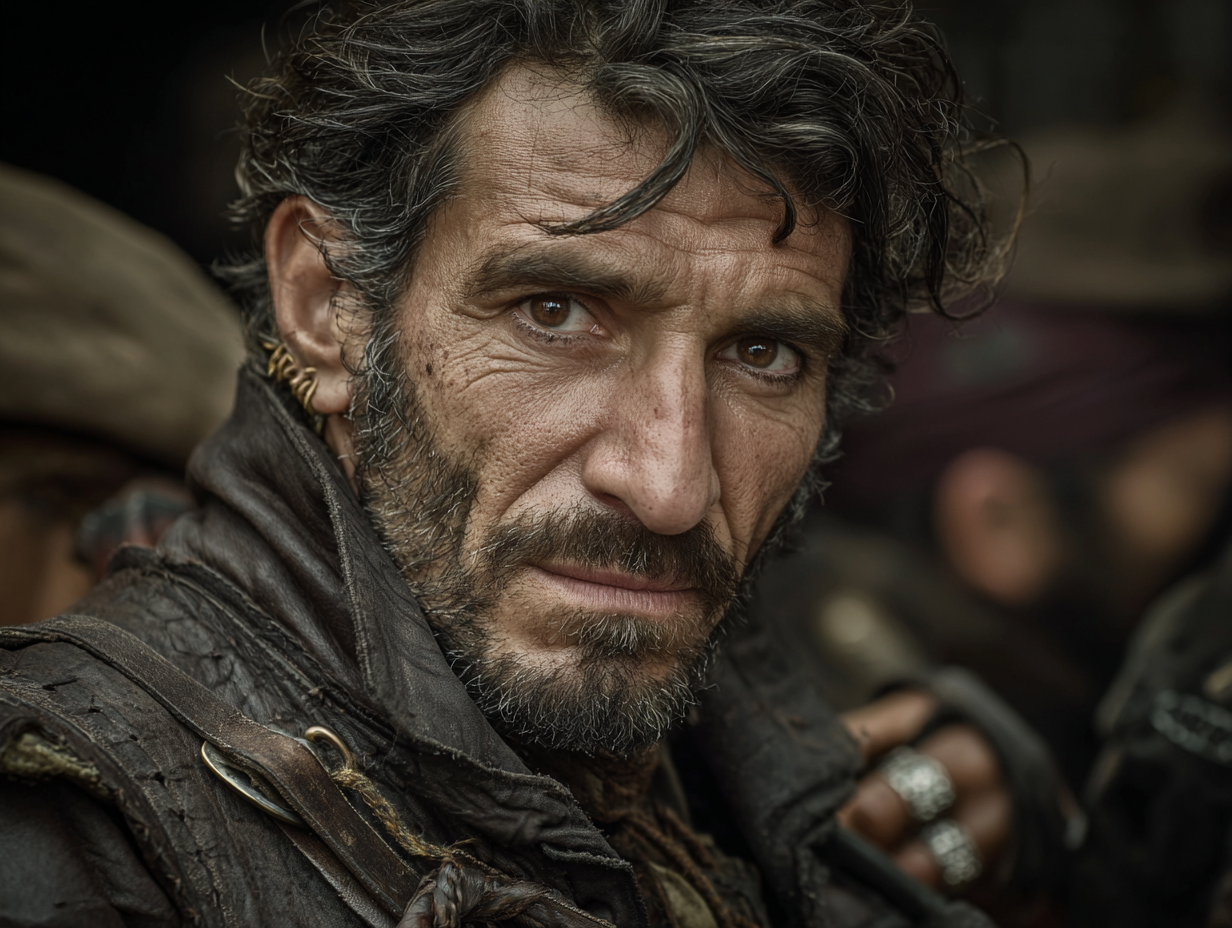
He slowed before fully entering the drop and said, “Where’s the other one?”
Bramble tightened his grip.
Garric, hood low, gave the man a rough answer. “Dead weight. Got the goods.”
The cloaked man came a little closer, suspicious now. “Dead weight? That’s not what was arranged.”
That was close enough.
Bramble moved.
He sprang from cover at the same instant Garric dropped the act, Meret and Corvin broke from hiding, and the prisoner did the one wise thing left to him and fled.
The cloaked man turned too late. Bramble’s rapier drove hard into his side. The man gasped, staggered, and then tried to run.
Bramble let him turn just far enough to make the next stroke matter. The rapier snapped out again, not to kill but to stop. It caught the man as he stumbled among the stones. He went down hard, face-first, and lay still but breathing.
Alive.
When the burst of movement had ended and the dust settled, no second figure came out of the brush. No bowstring sang. No hidden line showed itself. The man had come alone to the pickup. At least to the final approach.
“I could be wrong,” Bramble said, gesturing toward the brush where the earlier prisoner had vanished, “but I have a feeling he might change careers. I vote we let him. This”—he pointed to the unconscious man on the ground—“is where we will find the real information.”
Garric nodded. “Could be.”
Meret said, “I am not in the habit of trusting fear to reform a soul. But I trust it more than I trust wasting time on a lesser man while the greater one lies at our feet.”
Corvin folded his arms. “A fleeing hireling tells us little except that terror improves his speed. This one arranged routes, staged drops, and dealt in other people as tools. Yes. This is the seam we pry open.”
So Bramble searched the unconscious man at once, before anyone could move him or adjust what might be found. The captive was better equipped than the road thieves but no richer in any showy way. A serviceable dagger. Silver. Flint and steel. A plain dark ring. A corded tie. More interestingly, a waxed leather pouch and a folded scrap of rough parchment.
Corvin took the pouch and examined it with care. “Not food,” he said. “Not common spice. Not medicine I recognize on sight. Possibly alchemical. Possibly ritual. Possibly just something unpleasant carried by an unpleasant man. For now, treat it as suspicious and do not scatter it into the fire.”
The parchment mattered more immediately: a sketched road line, a marked turnoff, a simple symbol for the old stones, and a notation that looked like timing rather than prose. Not a confession. A working note.
The prisoner was bound thoroughly and brought back to the wagon. Meret checked the knots and tightened one without comment. That did not bode well for the captive’s comfort.
When he woke to find Garric above him, Meret beside him, Miller furious, Corvin holding his notes, and Bramble very much alive, some of the confidence was already gone out of him.
“You’re alive,” Bramble said calmly. “That’s because we wanted answers more than blood. Don’t make that a mistake on our part.”
The man swallowed. “What do you want?”
“I think you know exactly what we want to know,” Bramble said. “Why play games when you already know the cost?”
The captive studied each face in turn and seemed to arrive at the same conclusion Bramble had hoped for: the easiest lies would not survive this circle.
“No,” he said quietly. “You’re right.”
He called himself Lark. Not necessarily his true name, but the one he used. He admitted the wagon tip had come through him, not from him. It had been given by a hooded, educated-sounding contact who preferred to keep distance between his own hands and the theft. Goods moved by chain. Rumor bought off carters. Stable talk. Loose tongues. Sometimes, he admitted, someone farther in. Someone in places where goods were counted before they moved, where departures were heard before wheels turned.
“The road leaks,” Lark said. “If you know where to press.”
Miller’s face went hard at that.
The old stones were the break point. Loads were split. Valuable pieces moved onward in smaller hands to places where wagons would only draw questions. When Bramble asked him why not simply steal a wagon whole and drive it to whatever hole waited beyond, Lark gave a humorless breath and said, “Because we’re thieves, not idiots.”
Then came the answer that mattered most without quite saying the thing aloud. When pressed on what those smaller loads fed, he said only, “People who don’t want roads watched too closely. Places where supplies matter more than coin. Folk who prefer distance between their hands and their crimes.”
“The old places,” Garric said.
Lark looked at the ground. “The places folk around here talk about after drink and stop mentioning in daylight.”
The moathouse. Perhaps more than the moathouse. Enough.
At last Bramble had heard enough.
“That’s enough for now,” he said.
He let that sit long enough for Lark’s imagination to take it somewhere dark.
Then he added, “Let’s finish the job. Load him up on the wagon.”
Lark did not know whether that meant the end of his life, the end of the road, or the beginning of a worse kind of trouble. No one around him hurried to comfort him in the distinction.
Miller and Joran, once the run was completed under escort and without further attack, paid the rest of the agreed coin. Bramble split it as before. Cleanly. Without argument.
On the road back to Hommlet, with the bound captive tied in plain sight, Bramble walked near Miller for part of the way and said, “I’m thinking maybe this deserves a meal as well.”
Miller laughed then like a man remembering that laughter was still legal. “Aye,” he said. “I’d say you’ve more than earned one.”
Joran managed a tired grin. “If it comes with walls and no brush, I’ll call it a feast.”
“At this rate,” Corvin said, “Bramble is going to negotiate us into a permanent dining arrangement across the district.”
“Better than negotiating us graves,” Garric replied.
“A meal after useful work,” Meret said, “is one of the cleaner pleasures left in the world.”
✦
By the time Hommlet came back into view, the village watched them differently than it had watched them leave.
A wagon. Road-worn faces. Blood not all washed away. A bound prisoner tied in plain view. The unmistakable posture of people who had gone out uncertain and returned with proof.
Heads turned. Work slowed. Whispers began.
Bramble had already chosen that Lark would be taken to local authority before dark—publicly enough to matter, quickly enough not to risk his health, and early enough that the village would see this was no rumor dressed up after ale. The only question left was where authority actually lived in Hommlet.
So he asked Miller.
“If a bound road thief with ties to something larger needs to be put in the right hands before dark,” Bramble said, “who does that really mean here?”
Miller looked toward the southeastern rise where the tower of Burne and Rufus stood with its growing works around it.
“If you want him held, not merely stared at, then Burne and Rufus. They’ve got the standing, the muscle, and the sense not to treat this like a drunk brawl over a chicken.”
Meret did not argue. “The church can hear of it after he is secured.”
Joran said, “If he’s part of a chain, I’d rather he be somewhere folk can’t casually open a door for him.”
So the wagon turned toward the tower.
The place was not yet a castle, but it was plainly becoming one. Trenches. Stone. Men at work. A gate detail that straightened the moment they saw what the wagon carried.
“Halt there,” called one of the guards. “State your business.”
Bramble looked up at him. “We’ve intercepted a few thieves on the road. This one seemed worth bringing in for holding and follow-up. I understand this is the right place, is it not?”
The guard’s eyes took in the prisoner, the blood, the traders, the party around the wagon. That answered much of his question before the words did.
“Depends what sort of thief and what sort of follow-up.”
“Road ambush,” Miller said sharply. “Organized, not random. My wagon was the target.”
That changed everything. The guard signaled another man within.
“Aye,” he said. “If he’s more than a ditch-bandit, this is the place. Bring him down and mind he doesn’t try anything clever.”
Inside the tower works, the order of the place pressed itself into the senses at once: practical, disciplined, unfinished only in the visible sense. Authority under construction, but authority all the same.
They waited only long enough to understand they were being made to wait.
Then two men arrived together.
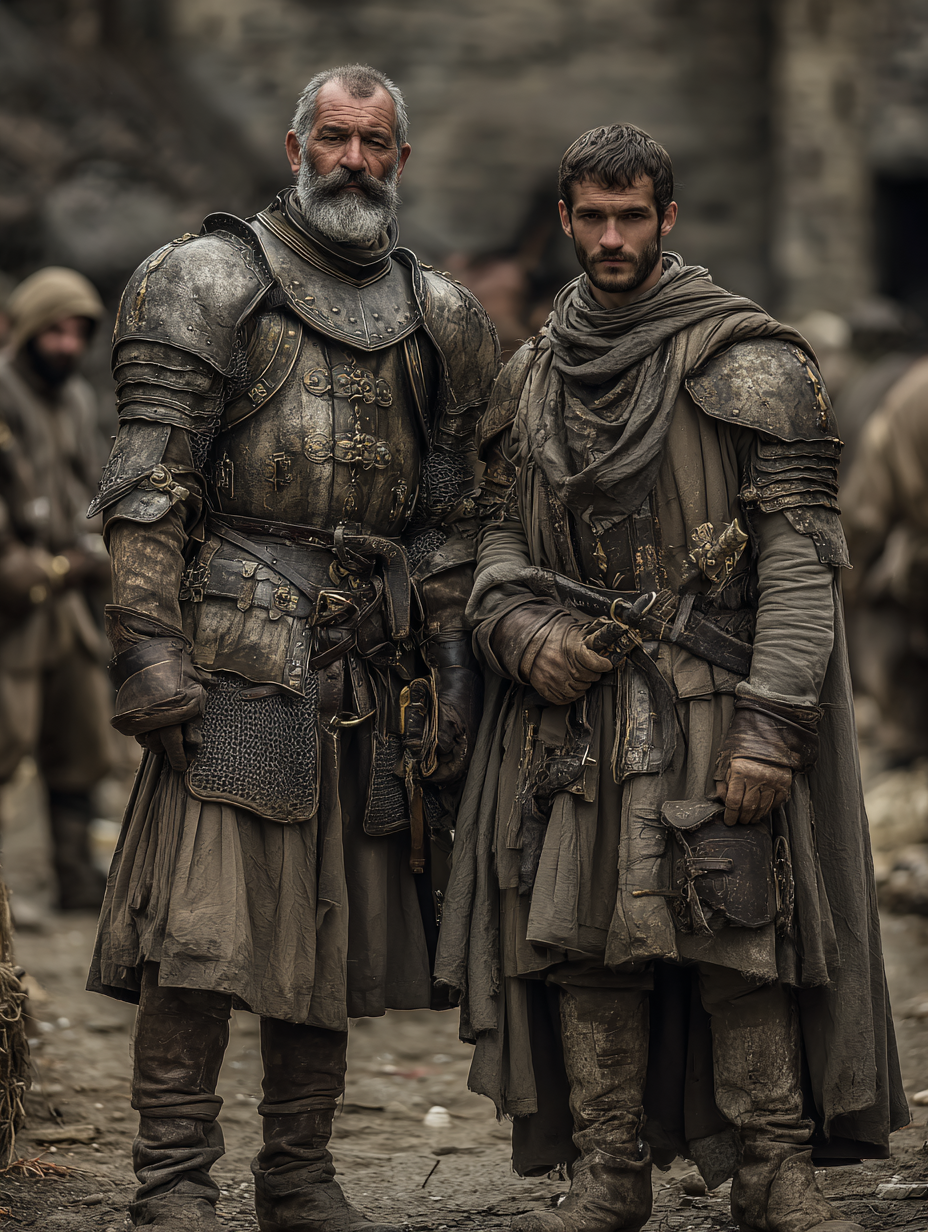
One was plainly a fighter: experienced, direct, carrying command not as pose but as a habit grown natural. The other bore himself with more restraint and thought, with the look of someone accustomed to weighing words before choosing where to set them.
Rufus and Burne.
Rufus’s eyes went first to the prisoner. Burne’s went first to the party.
“Report,” Rufus said.
Burne, calmer, added, “From the beginning, and without improvement.”
Bramble felt the irony of it then. The smallest one in the room, and the one meant to speak first. He glanced toward Garric, but the fighter gave a slight shake of his head.
“Your lead,” he said. “You saw the road first.”
Burne noticed something of Bramble’s thought in the hesitation before it could become words.
“Competence,” he said mildly, “is not measured in inches.”
Corvin went very still at that, as if someone had stolen a line he had intended to use later.
So Bramble told it.
Not like a clerk making a neat record. Like a man eager and alive enough in the telling that the whole thing came back through him as heat rather than report. He gave them the escort job, the brush sign, the overheard line that proved the wagon had been sold ahead of time, the first ambush, the surrender, the dead-drop at the old stones, the sting, the second capture, the notes, the pouch, the route leaks, the implication of a larger chain stretching toward the old places.
And somewhere in the telling, with just enough relish to make it memorable, he reported what one of the thieves had called him.
“The ghost.”
He did not try to make more of it than it was. He did not have to.
When he finished, the room held silence in the right way.
Not doubtful. Not indulgent. Measured.
Rufus said, “Good work.”
From him, the words landed like something forged instead of merely said.
Burne looked from Bramble to the rest of the company, then to Miller and Joran, and finally to Lark.
“More than good luck, then,” he said. “Method. Nerve. Restraint. That combination is rarer than enthusiasm.”
Miller stepped forward enough to back the report. “It happened as he said. They saved my run, uncovered the drop, and brought you a live man instead of a rumor.”
Rufus signaled to his men. “Take the prisoner. Separate holding. Search him again. No visitors. No loose talk.”
Lark stiffened then for the first time since arriving. Two guards took him away.
Burne turned his attention to the recovered evidence. “The parchment and pouch stay here for examination, unless you object.”
No one did.
Then Rufus looked back to the party. “You did right bringing him here before dark. You did better bringing him alive. We’ll want fuller statements from all of you. Not tonight if you’re spent. But soon.”
Burne’s mouth shifted just slightly. “As for ‘the ghost’—if you intend to keep that name, I suggest you earn it twice before you grow too fond of it.”
From the corner of his eye Bramble could see Corvin nearly smiling.
By the time they stepped back out into the lowering light, the village was no longer just a place they had entered that morning. It was a place they had already affected. A place that had seen them go out as strangers and return as something harder to overlook.
Miller cleared his throat. “Well. I believe there was talk of food.”
Joran nodded quickly. “And walls.”
“And ale,” Garric said.
Corvin added, “And perhaps a table where our smallest companion can enjoy being legendary for at least one evening.”
Meret looked at Bramble then, and there was something in her expression that came closer to warmth than it had before.
“You did make a difference today,” she said.
The road to the Welcome Wench lay before them again, now lit by the kind of evening that makes a village seem briefly gentler than it truly is.
Bramble walked toward the inn with the others, road dust on his boots, new coin in his purse, and a name trailing him now that had not belonged to him at sunrise.
The ghost. Not yet earned twice. But earned once—and in a place like Hommlet, once was enough to begin.