

Chapter Two
The Church, the Grove, and the Road
Morning came with pale light through the shutters and the smell of bread baking somewhere below.
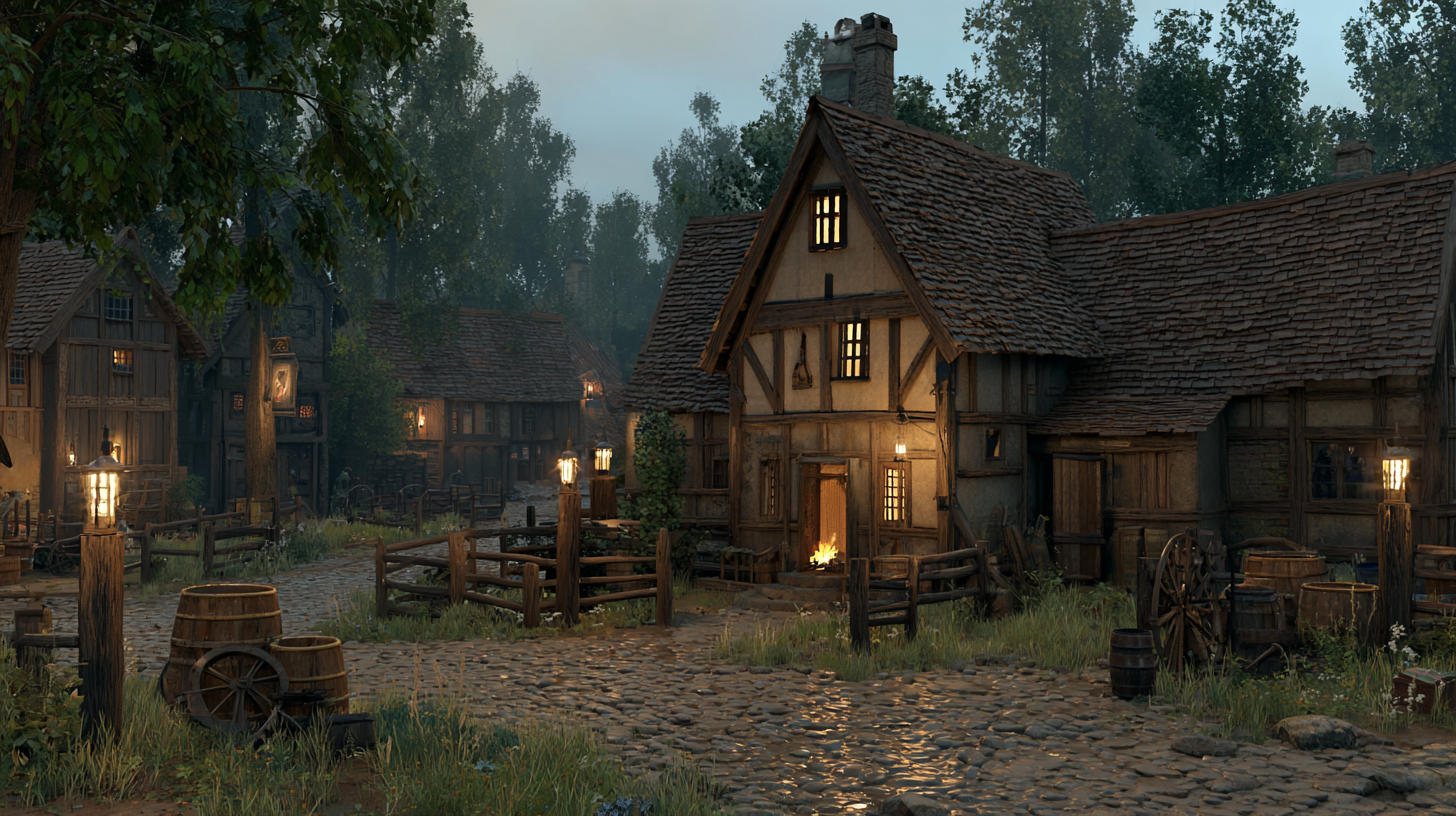
The four of them gathered in the common room while the village beyond the inn woke properly. The plan had already begun to shape itself the night before, but Bramble wanted one detail settled before they walked into a holy place.
“Does it make sense,” he asked, “to arrive in parts or as a whole?”
“As a whole,” Garric said immediately.
Meret nodded. “Agreed. A church is not an alley. If we go separately, it suggests caution of the wrong kind. Or mistrust.”
Corvin said, “And if one of us speaks unwisely, it is better the others are present to improve the impression.”
Garric looked at him. “You say that like it’s theoretical.”
Corvin ignored him with dignity.
Bramble smiled faintly. “I like breakfast, but I like being a part of something more. Next time.”
He opened the door and led them out into the village morning.
The Church of St. Cuthbert stood solid and respectable, built more for permanence than ornament. It did not try to charm. It tried to endure. Stone and timber. Clean lines. Little wasted flourish. Whatever else might be true here, this was no neglected shrine.
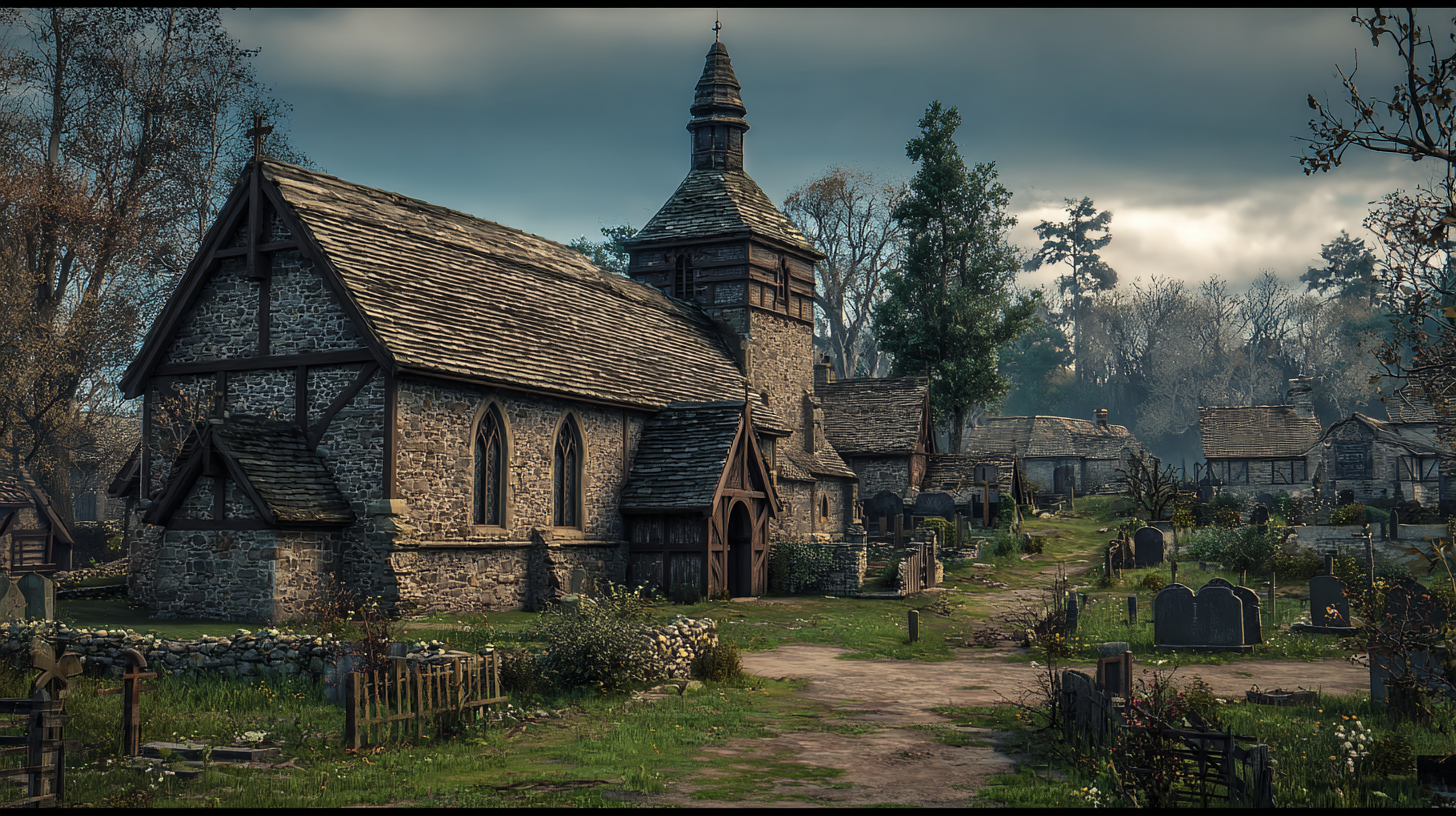
At the entrance the party slowed.
Meret glanced once at Bramble. “Your question. Your opening, if you want it.”
He shook his head. “I want to defer to you. You’re more familiar with the church than I am.”
She accepted the handoff with a small inclination of the head and stepped forward.
“Good morning,” she called in a clear, respectful voice. “We are travelers newly come to Hommlet. We seek proper introduction, honest counsel, and leave to ask a few questions of those who keep this church.”
The reply was not immediate. Then a man in clerical dress approached from farther within, deliberate and unsmiling. His eyes went first to Meret, then to the others one by one.
“You may ask,” he said. “Whether you are answered depends on the wisdom of your questions.”
Corvin’s face became very still at that. Garric did not move. Meret seemed unsurprised.
She said, “We are newly come, and we would rather begin with truth than rumor. What should honest travelers understand about Hommlet before they mistake noise for danger—or danger for noise?”
“That depends on whether they are merely passing through, or whether they mean to involve themselves.”
His gaze went over the company again.
“Hommlet is not lawless. Nor is it naïve. This church stands for order, right conduct, and the correction of wrongdoing. People here work, worship, and endure. They do not thank strangers for stirring fear where none is warranted. But neither do we ignore evil when it truly presses near.”
“Then we are of one mind in principle,” Meret said.
She asked next about the roads, the unrest, what prudent travelers should take seriously. The priest gave little away except the shape of his own judgment: that there had indeed been cause for concern, and that useful people began by listening, conducting themselves properly, and proving they could distinguish duty from appetite.
Bramble let Meret handle the exchange until he felt the conversation settling into the rigid calm of a door not quite shut. Then he offered the only thing that seemed worth adding.
“We do mean to help,” he said, “although I understand that words don’t mean as much as they used to today. Hopefully we will find opportunities to speak with action.”
That landed better than boasting would have.
The priest inclined his head slightly. “You speak more wisely than many who arrive meaning to do good. Action is the proper language of duty. Intent matters. Deeds matter more.”
He considered them all once more. “You may return, if your conduct warrants it.”
It was not warmth. But it was a beginning.
Outside, Garric exhaled. “Not friendly.”
“No,” said Meret. “But not closed.”
“A useful distinction,” Corvin said, “if one enjoys speaking to doors that are almost willing to open.”
They left the church behind and did not choose a destination so much as a pace.
Hommlet revealed itself better in daylight. It was not rich in the grand sense, but it was prosperous by village standards. The lanes were worn by real use. Gardens were kept. Fences were mended. Smoke rose from cookfires and workshops alike. It felt healthier than many villages and more watchful too. People looked up as the four of them passed. Some nodded. Some did not. The place remembered who belonged and who had arrived too recently to count.
To the southeast, beyond some of the village buildings, work rose around the tower of Burne and Rufus. Trenches. Dressed stone. Labor. Money. Authority becoming visible in the landscape.
“This place has not decided whether we are harmless yet,” Meret said.
Garric looked over the fields and fences. “Good fields. Good fences. Enough coin here to make people protective.”
Corvin glanced toward the tower works. “And enough concern to spend heavily on walls.”
For Bramble, the feeling that grew in him then was familiar in a way that mattered. Not because Hommlet was home. Because it was the kind of place that could become one if a man earned it. The sort of place where people knew who fixed a gate, who lied in public, who stayed to help in bad weather, who kept his word, and who did not.
The thought stayed with him long enough that the next stop felt natural.
“The grove sounds interesting,” he said. “I don’t think there’s any immediate need for supplies or shopping.”
Corvin looked pleased in the careful way he did when trying not to sound too pleased. “Good. Churches tell you what ought to be true. Groves sometimes tell you what is.”
Garric rolled one shoulder. “As long as nobody expects me to enjoy speaking with trees.”
✦
The change came gradually as they made their way toward Jaroo Ashstaff’s grove. Village sounds thinned first. Fewer voices. Less hammering. Less wheel-creak. Then the air itself felt different—cooler in the shade, touched by leaf-mold and growing things instead of cookfires and worked earth.
The grove was not wild. But neither was it tamed. It felt like a place that had been asked for permission rather than forced into neatness. Trees given room to remain themselves. Paths that seemed chosen rather than imposed. Offerings left with intention rather than display.
A weathered man stood ahead among the trees, staff in hand, as if he had been there long enough that the grove had started to look like an extension of him.
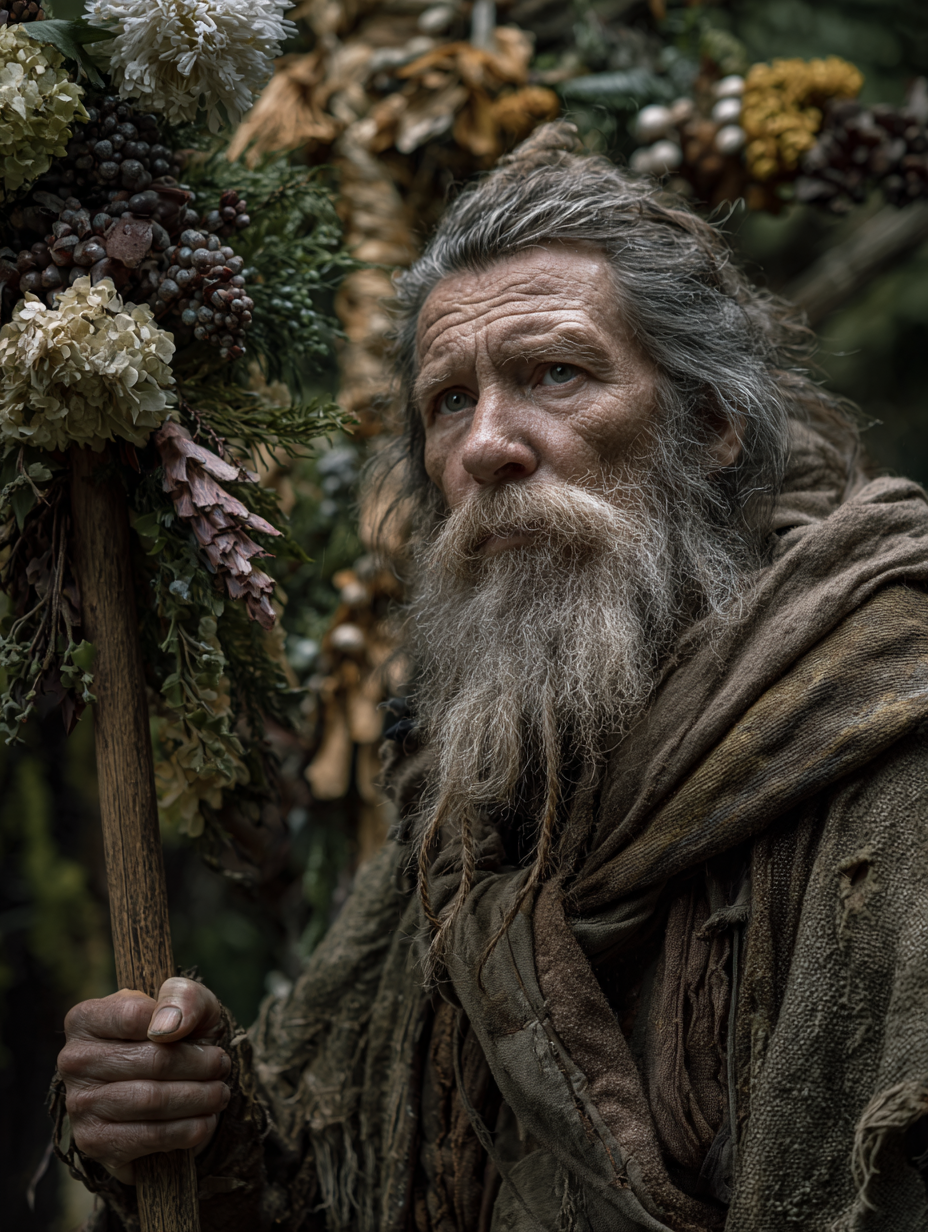
“You are not from here,” he said.
“Aye,” Bramble replied. “I suspect you’ve noticed more about us than that already.”
One corner of the man’s mouth shifted. “Of course I have. I see four armed travelers walking together through a village that has reasons to watch such things. One carries steel like a man who has used it. One carries learning like a lantern and would rather not hide it. One knows churches from the inside, or near enough. And one”—his eyes settled on Bramble—“looks at paths, hands, roofs, and people before he looks at scenery.”
Corvin murmured, “I dislike being described accurately.”
The druid planted the butt of his staff lightly in the earth. “You have been observed all day because this is a village, not a wilderness crossing. That is how such places survive. And this grove is not a roadside ditch. People do not come here by accident.”
Then he asked, “Have you come here to ask, to offer, or merely to see?”
Bramble stepped to the offering place and laid a single gold coin there. “Forgive us, but we have little to offer. We don’t really seek assistance at this time. Just understanding. We’re observant and wished to see the area, hear about any problems, and help the people.”
Jaroo’s eyes dropped to the coin, then rose again. “That is not much.” A beat. “Which makes it better than much that is given for show.”
He nudged the coin lightly with the end of his staff. “You say you do not seek aid, only understanding. That is at least cheaper.”
He spoke then of Hommlet’s people: of the Old Faith, of the church, of labor and caution and the difference between real trouble and the kind restless people create because they mistake unease for prophecy.
That made Bramble catch one word.
“You mentioned recognizing a prophecy,” he said. “As of yet we have not heard any. Is that anything in particular that we might be aware of that you’ve given credit to?”
Jaroo gave him a long, level look. “I did not say there was a prophecy. I said a broken fence is not one.”
He shifted the staff slightly in the earth.
“People who grow uneasy begin to treat every small hardship as a sign that fate is shouting at them. A lame mule. A bad harvest. A stranger on the road. A quarrel between neighbors. Most such things are exactly what they appear to be: ordinary troubles in an ordinary world.”
Corvin, arms folded, said, “So you mean pattern, not omen.”
“Just so.”
Jaroo’s gaze returned to Bramble. “If I had credit to give some grand prophecy, I would not spend it on guessing. I give credit to memory. To habit. To the way decent folk begin looking over their shoulders at the same time for reasons they cannot quite name.”
Garric asked whether he thought the watching justified.
“I think watching is wiser than sleeping.”
The old druid’s advice and the church’s, when stripped of their differences in tone, were very nearly the same: observe first. Help concretely. Earn trust before expecting deeper truths.
When Bramble thanked him for his time and patience, Jaroo inclined his head.
“That is a better thing to look forward to than glory,” he said. “Learn carefully. Help where help is plain. And do not let other people’s fear become your map. If you do that, you may yet become useful here.”
They withdrew, and the village lanes took them again.
✦
At a crossing of lanes, with carts moving and chores in progress all around them, Bramble slowed and looked from one companion to the next.
“Before we keep wandering on instinct alone,” he said, “I’d like to know we’re all pointed the same way. Is this where we want to be? And what exactly are we trying to do here? We never really said why we came together or what the goal is.”
The question changed the weight of the road around them.
Garric answered first. “Fair question. For me, it’s simple enough. The roads have gone bad in this district. Bad roads become bad villages if no one checks the cause. I’ve seen that happen. I’d rather stand where trouble’s starting than where it’s already burned half the countryside.” He glanced down the lane and back. “I came because this place looked like the sort that might still be worth protecting.”
Meret said, “I came because unease gathers in places before evil shows its full face. If honest people are already growing fearful, I would rather be present before fear turns into cruelty, cowardice, or denial. And if there is corruption here, I would see it named clearly.” She folded her hands. “My goal is not treasure. It is clarity, and then action.”
Corvin sighed softly, perhaps at how grimly respectable the other two had made themselves sound. “I am here because places with layered stories interest me, and because ‘old danger sealed away but perhaps not entirely’ has a remarkably consistent habit of becoming everyone’s problem eventually.” He glanced at Bramble. “Also because I prefer learning the truth before less thoughtful people set fire to it.”
Then he shrugged. “So my goal? Learn what is real. Separate rumor from history, history from active danger, and active danger from profitable stupidity.”
Meret said, more quietly, “As for whether this is where we want to be—yes. I think it is. Because this village still feels salvageable. That matters.”
Garric nodded. “Agreed.”
Corvin gave the smallest of shrugs. “A place with real people, real stakes, and enough mystery to reward patience. I can tolerate it.”
That, from him, was practically devotion.
The three of them looked at Bramble then—not because he outranked them, but because he had asked the question that turned a group of travelers into something more deliberate.
Bramble smiled a little. “I’m glad to hear it from each of you. Your words are the same as I’ve been thinking since we sat down for supper last night, and they’ve been rolling around my head and needed to come out.”
Garric gave a short nod. “Good. Better spoken now than after steel’s drawn.”
“Not every purpose needs to be declared before it is tested,” Meret said.
Corvin added, “And some purposes improve by surviving contact with reality.”
No one pressed Bramble further, and that settled the matter in the only way that would have felt right.
When the silence that followed had turned from weight to readiness, Bramble said, “I’m eager to get my hands—or even my sword—dirty. Makes for a better sleep tonight.”
“That,” said Garric, “is a sensible standard.”
“Let’s hope for hands before swords,” Meret said.
Corvin sighed. “You’re all determined to make this sound like labor instead of destiny.”
No one answered him.
✦
The busiest part of Hommlet showed practical need as plainly as any sermon. A wagon sat overloaded and in danger of tipping while two men tried to unload it before the axle worsened. At the smithy a minor quarrel was brewing over some delayed work. Near a lane where travelers passed in and out, two men stood with tack and harness, speaking low over the road and the risks of going it lightly.
Bramble’s eye went to the last at once.
“Escort work, maybe,” Garric said.
Meret looked toward the wagon. “Immediate need there too.”
“A wonderfully instructive village,” Corvin murmured. “It offers labor, conflict, and danger in one street.”
Bramble’s answer came quickly. “I think we should have one of us negotiate the road work while the other three help with the wagon. This could be a good opportunity to be the leader and distribute the work.” He nodded toward the overloaded cart. “That wagon looks like it’s about to fall over any moment. I’m willing to help there, but I might be better at negotiating us a job on the road. Are you lot all right with us taking on both?”
“That works,” Garric said at once. “I’m more use there than haggling over pay.”
Meret nodded. “If the cart goes, someone could be hurt. That takes priority. But if there is honest coin in escort work, we should not let it walk away while we play laborers.”
Corvin gave Bramble a sidelong look. “You are, in fact, probably the best among us at sounding harmless, competent, and not ruinously expensive.”
“That’s a compliment,” Garric said.
Corvin ignored him.
“Then do it cleanly,” Meret told Bramble. “No exaggeration. No promises we haven’t agreed to keep.”
So Bramble went to the road men while the others moved to the wagon.
The older of the two travelers saw him coming and cut off whatever he had been saying to the younger. “Aye?”

“Greetings,” Bramble said. “I couldn’t help but wonder if you gentlemen might be in need of some well-armed support. I didn’t mean to eavesdrop; sound just travels loudly lower to the ground.”
The older man stared at him for half a heartbeat.
Then, despite himself, he laughed.
“Well. That’s one way to open.”
The younger man snorted, unwillingly amused.
The older man looked Bramble over again, then glanced toward the wagon where Garric was already putting shoulder and hands where they mattered, Meret was directing two flustered laborers with quiet authority, and Corvin—by all appearances in genuine hardship—was carrying crates.
“Maybe not an empty claim, either,” the man said. “Name’s Miller. This is Joran. We might be in need of support, depending on what you call support, where you’re bound, and how dearly you think being well armed ought to be paid.”
“We come together as a package deal,” Bramble said, “and while not free, we are reasonable and capable. What did you have in mind?”
Miller rubbed at his jaw. “Simple version: we’ve a small load that needs taking out of Hommlet and delivered along the road toward the old moathouse track.”
He watched Bramble for the reaction. Bramble gave him none.
“It’s not a long run,” Miller continued, “and normally I’d say too short to bother hiring blades. But the roads have been wrong lately, and anything branching that way makes folk uneasy.”
Joran muttered, “With reason.”
Miller ignored him. “Not looking for a war band. Just a competent escort there and back, eyes open, steel ready if needed, and no panic if the road gets strange. For the four of you, I’d offer twelve gold total. Half when we set out. Half on safe return.”
A fair offer. Not generous. Not insulting either.
Bramble nodded once, then asked, “Might not be the normal question you get, but we’d have to know what we’re carrying. Not that I don’t find you respectable, but we’re new in town and it seems like respect is well earned by respectable action.”
Miller’s expression changed. Not offended. Not pleased. Measured.
“That,” he said, “is a fair question. Better than fair.” He rested one hand on the wagon frame. “Foodstuffs. Dry goods. A little lamp oil. Common trade, nothing forbidden, nothing clever, nothing worth lying over if I can help it.” He jerked his chin toward the road. “The sort of load folk still need moved even when the roads start making decent men nervous.”
Then, because Bramble had asked it as he had, Miller added, “If I were looking to move something shameful, I’d hire men with fewer questions and worse reputations.”
The answer landed cleanly.
“You can inspect the load before agreeing,” Miller said. “All of it.”
Bramble smiled. “No need for an inspection. One minor adjustment to the price, though. How about a shared drink after, at the Welcome Wench, as a bonus when the job is done?”
Miller barked a laugh. “Gods above. You really are new.”
Even Joran cracked a grin at that.
“Aye,” Miller said. “Done. Twelve gold for the job, and a shared drink after at the Welcome Wench if we come back whole.”
By then the wagon crisis had been settled and the others were rejoining them. Garric heard “moathouse track” and his expression tightened, not in fear but in focus.
“When do you want to leave?” he asked.
“Sooner’s better,” Miller said. “Today, if you’re taking it.”
Meret looked to Bramble. “It is early enough still. If we go, we go prepared and with clear eyes.”
Bramble held out his hand. “Absolutely. When do we start?”
“Now,” said Miller, taking it.