

Chapter One
A Good Inn and a Strange Village
Late afternoon laid a warm gold over the fields as four travelers came down the road toward Hommlet.
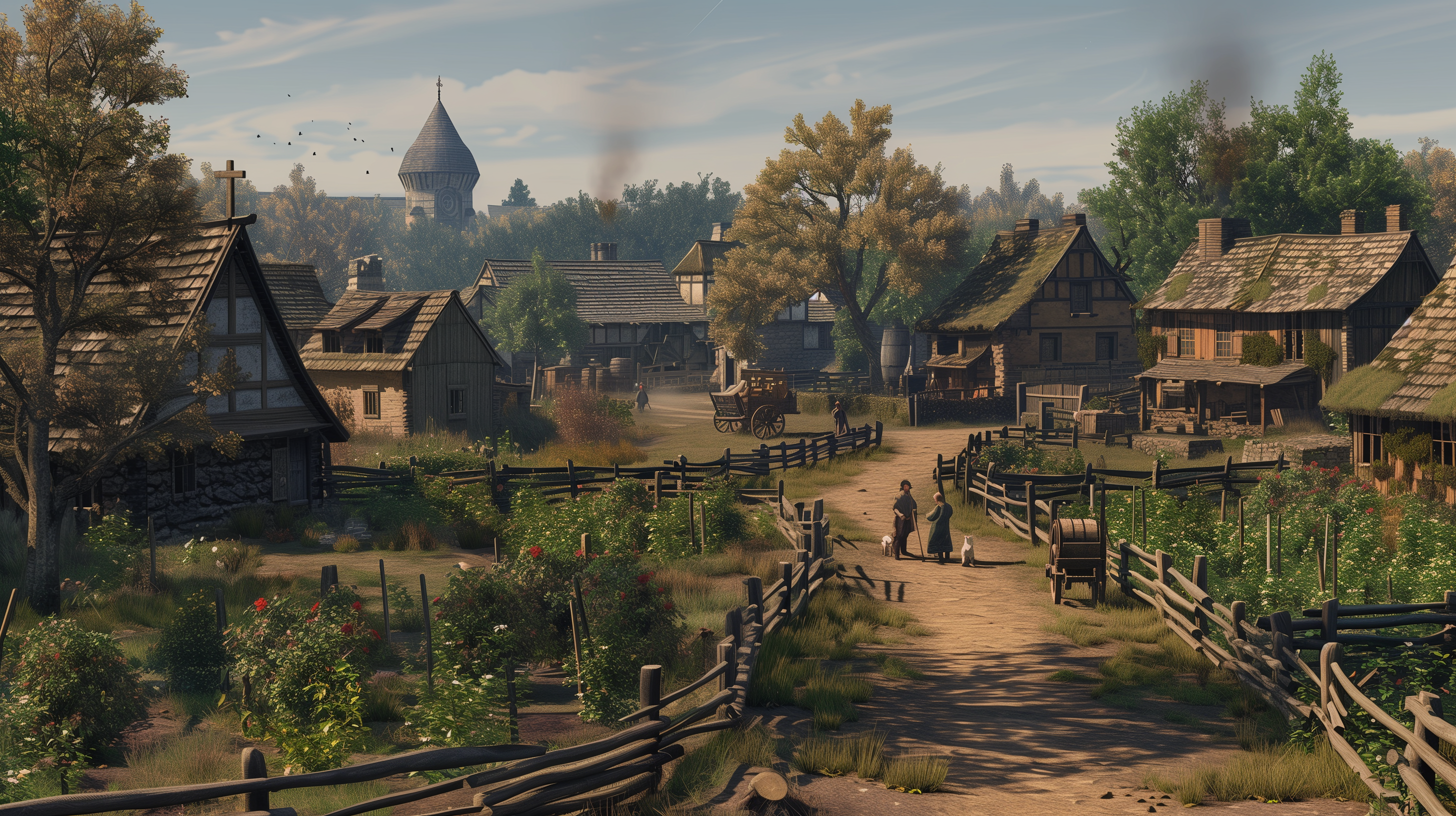
The village did not look grand. That was the first thing Bramble Thornfoot noticed about it, and also the first thing he liked. Hommlet looked lived in. Low buildings. Smoke rising from cookfires. Split-rail fences and dark turned earth. Orchard rows. A wagon creaking somewhere ahead. A dog barking once, twice, then deciding that was enough. There was traffic enough to mark it as a place that mattered, but not so much that strangers could vanish in it.
Beyond the nearer homes Bramble could make out the shape of a proper inn, a cluster of trade buildings, and a handful of houses better kept than the rest. The roads had that look certain village roads had, worn by habit and memory rather than by design. Travelers came through here often enough. Not so often that no one would care who they were.
Which meant the place would notice them.
Bramble walked at the front edge of the little company, drifting ahead now and again, then easing back without seeming to. The habit came naturally. Sightlines. Fences. Lanes. Doors. Windows. Roofs. Hands. The road into Hommlet was broad enough and harmless enough, but first impressions mattered in places like this. A man did best to decide early whether he wanted to be seen as harmless, capable, forgettable, or rich.
Behind him came Garric Thorne, who carried the road like a man who had paid for his education in miles and bruises. Broad-shouldered, scarred, and quiet, Garric had the patience of a cart horse and the expression of someone who mistrusted luck on principle. Sister Meret walked with a composed economy that somehow made her plain traveling gear seem more disciplined than humble. She had the kind of face that was not cold so much as honest enough to unsettle people who preferred softer lies. Corvin Vale, half scholar and half trouble in better boots, took in the place with the dry intelligence of a man already composing three judgments and two counterarguments before he had even seen the inn sign.
Garric shifted the strap on his shield. “Looks quiet.”
Meret answered without warmth. “So do graveyards.”
Corvin squinted ahead into the village. “That, at least, is promising. Villages that want to be found usually know how to hide their teeth.”
No one laughed. Not really.
Bramble did. Only a little.
He looked ahead again and said, “Every good adventure starts in a tavern. Besides, it’s time for some real food.”
That got him a snort from Garric.
“Food, walls, and rumors,” the fighter said. “Good enough.”
“We eat before dark,” said Meret. “Listen before drink. Trust no one too quickly.”
Corvin gave Bramble a faint smile. “A strategy both ancient and respectable.”
So they went to the inn.
✦
The Welcome Wench sat larger and better-kept than the surrounding buildings, with a proper yard, stable, and the settled look of a place that had done well from travelers for years. The smells hit first: roasted meat, fresh bread, ale, woodsmoke, and something richer underneath that suggested this was no poor roadside kitchen.
Inside, the common room was warm and clean and not yet crowded. A fire burned low but steady. Two local-looking men sat with mugs in hand, speaking quietly over a table. A travel-stained peddler nursed a drink by the wall beside a heap of bundled goods. Another man—broad through the shoulders, country-born by the look of him, and easy in a bench as if it had been made for his back—leaned there with the loose comfort of someone very much at home.
Behind the bar stood a heavyset innkeeper with an apron, a practiced eye, and the unmistakable air of a man who judged purse, appetite, and trouble in the same glance.
His gaze passed over Garric’s shield, Meret’s holy symbol, Corvin’s case of books and papers, and finally settled on Bramble.
“Welcome, travelers,” he called. “Supper, drink, beds, or all three?”
The room went just quiet enough that the answer would be heard.
Bramble stepped forward with his easiest smile. “Thank you. I think all three tonight, my good man.”
The innkeeper nodded. “Can do. For supper, plain or elaborate? For drink, ale, beer, mead, wine, or something stronger. For a bed, there’s the common dormitory or private rooms if your purse is feeling ambitious.”
He planted one broad hand on the counter.
“And for the rest of your company?”
Garric rested a hand on his sword pommel, not threateningly, merely as if that was where his hand belonged. “Plain supper. Ale. Bed under a roof.”
Meret said, “Plain supper. Small beer. A clean bed is enough.”
Corvin cast a quick glance around the room before answering. “Plain supper. Ale. Private room if it’s available and not absurdly priced.”
The innkeeper’s eyes narrowed in faint approval, as if Corvin had passed some minor test by not sounding either poor or stupid.
Bramble leaned one arm on the bar. “Plain supper, ale, and the dormitory, please. Maybe some drippings on the side for dipping the bread?”
A couple of the locals chuckled at that.
The innkeeper gave a grunt that sounded suspiciously like amusement. “Plain supper, ale, and a bunk, then. And if the cook’s in a generous mood, you’ll get your drippings.”
He scratched a note, took the coin, and jerked his chin toward a table with a useful view of the room.
“Sit there. Food shortly.”
The table suited Bramble just fine. It gave sight of the door, the stair, most of the common room, and the bar. Garric noticed that at once and gave the smallest approving nod before settling onto the bench with the ease of a man who preferred a wall near his back. Meret sat upright, her hands folded near her mug when it came. Corvin set his case down with care and began taking the room in as though it were a page he expected to annotate later.
Bread arrived first, coarse but fresh, with a little crock of savory drippings on the side after all. Bramble tore off a piece while the first real warmth of the place worked its way into him. He had just tested the drippings when the broad local-looking man rose with his mug and wandered over.
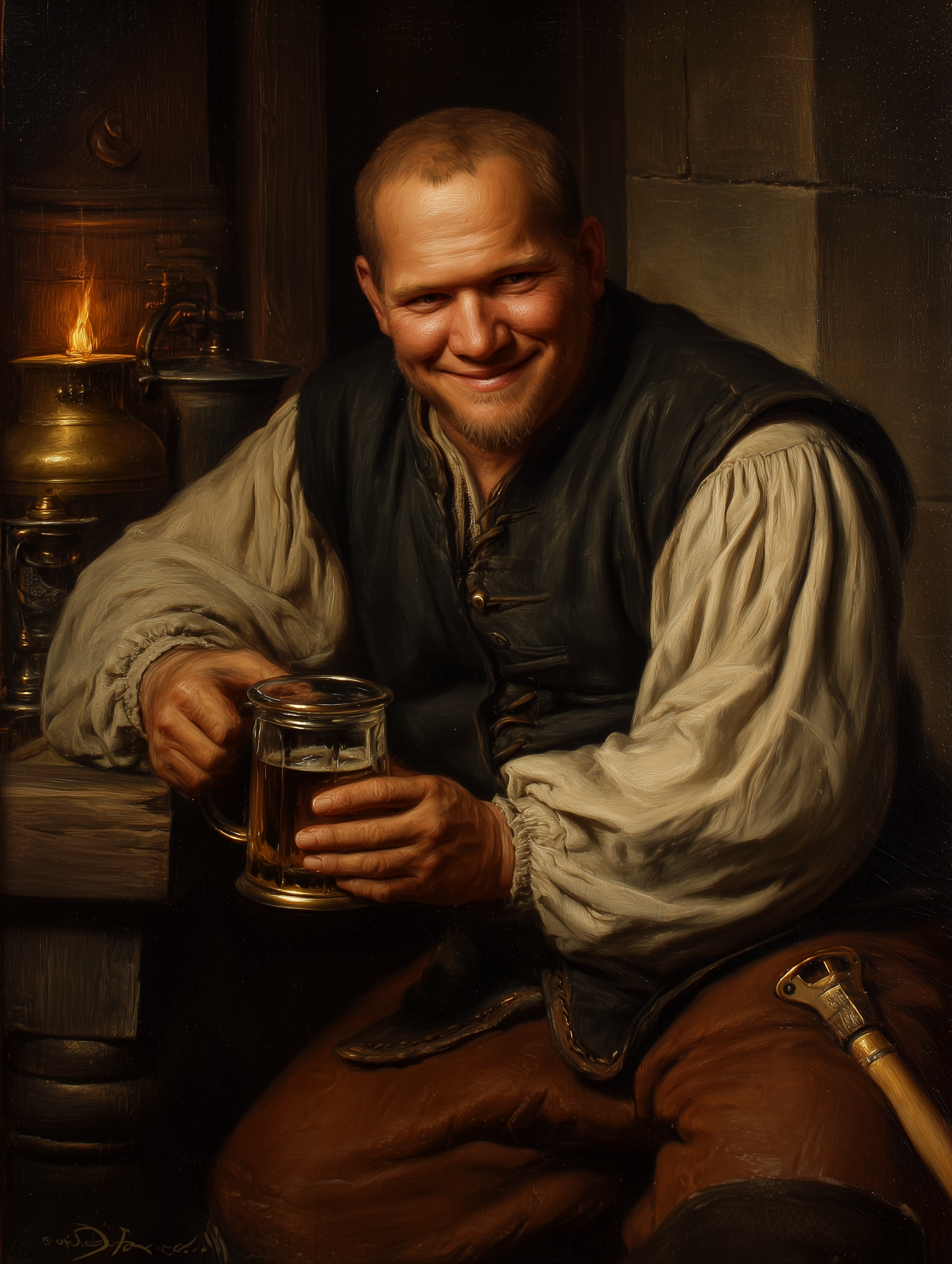
He stopped a polite distance from the table.
“Beg pardon,” he said. “Saw you come in. Don’t recollect your faces. New to Hommlet, are you?”
The tone was friendly enough. Perhaps too friendly. Bramble caught the difference at once. This was not a fool speaking because he loved the sound of his own welcome. This was a man taking their measure while pretending not to.
Bramble could have answered himself. Instead he sat back a fraction and let the silence fall where it pleased.
Garric wiped his fingers on a scrap of cloth and looked up. “We are. Passing through for now. Looking for a hot meal, a roof, and a sense of whether the roads ahead are worth the trouble.”
It was a good answer. True enough to breathe, vague enough to keep its armor on.
The broad local grinned. “A fair answer. Better than most strangers manage.” He shifted his mug to the other hand. “Name’s Elmo. Born hereabouts. I know the village, the fields, and most of what’s worth knowing before supper and after ale. Roads’ve been lively of late. Depends what sort of trouble you’re hoping is worth it.”
Corvin folded his hands together. “The profitable sort, ideally.”
That earned a short bark of laughter.
“Aye,” said Elmo. “So does everyone’s.”
Bramble watched him a moment, then said, “What can you tell us about Hommlet?”
Elmo leaned a shoulder against the nearest post, as if he had no desire in the world more pressing than to answer. “Depends what you want to know.”
He ticked the points off with one thick finger.
“Hommlet’s a prosperous little place, by village standards. Better fed than some, better built than most. Folks farm, trade, mend, brew, worship, gossip, and mind each other’s business while pretending not to.” The corner of his mouth twitched. “Good inn. Good smithy. Fair bit of trade. More strangers than there used to be.”
He drank.
“Used to be quieter. Years back, the country near here saw ugly times. Then came better times. Last year or so, the roads started getting mean again. Not war. Not open trouble. Just enough banditry and bad signs to put folk on edge.”
His gaze moved around the room.
“So now outsiders come through again. Some are honest enough. Some are treasure-hunters. Some are worse than whatever they claim they’re hunting. Village hasn’t gone soft, mind—but people watch strangers a bit harder now.”
He gestured with the mug.
“Worth knowing? Welcome Wench for food, beds, and ears. Smith if you need ironwork. The church if you like your answers stern. The grove if you prefer them old and green. Burne and Rufus up in their tower if your business is serious enough to reach their notice. And if you’re smart, you learn who talks too much after dark and who never talks at all.”
Meret’s eyes narrowed just a hair at that.
Elmo glanced at her and then back to Bramble. “As for the people? Most are decent enough. Some are newcomers trying to fit. Some were born here and still think anyone who arrived two winters ago is a foreign invader. Same as anywhere.”
“And how do you make do here?” Bramble asked.
Elmo’s grin shifted again, pleased that the question had turned to the man and not only the map around him.
“How do I make do?” He scratched at his jaw. “Bit of this, bit of that. Farm work when it needs doing. Lend a hand where a strong back helps more than clever talk. Keep an eye on things. Village life, mostly.”
“As for most folk here,” he went on, “farming first. Trade second. A few crafts worth knowing—smithing, weaving, carpentry, stonemasonry, brewing, horseflesh, that sort of thing. Enough passing traffic to keep coin moving through, especially with the inn doing well and more strangers coming by than there were a few years back.”
Garric tore bread and said, “And the trouble on the roads helps no one.”
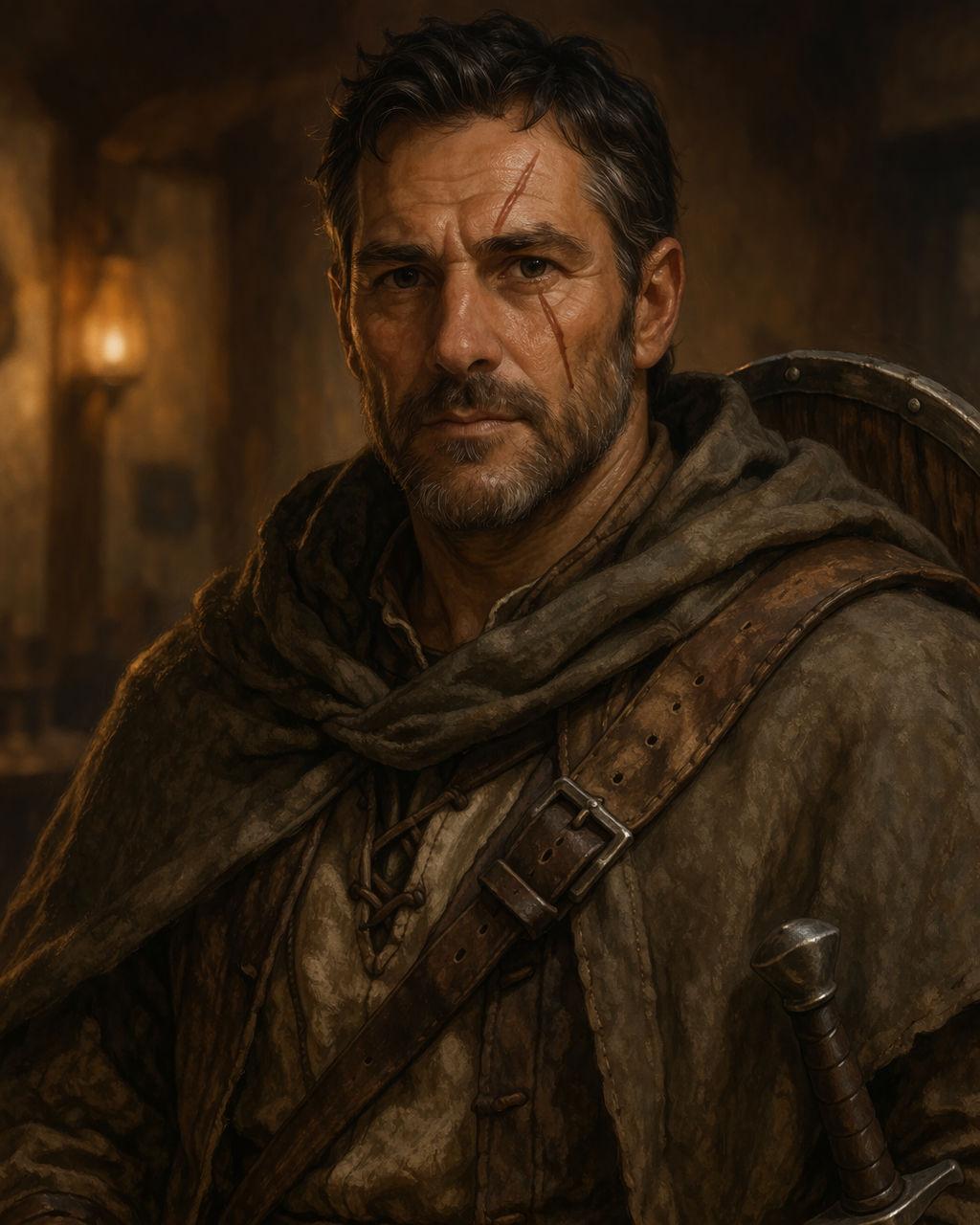
“No,” Elmo said, “but it puts coin in some hands and swords in others.”
Meret finally spoke. “You said you keep an eye on things.”
Elmo took another drink. “Village needs men who notice who’s arrived, who’s lied, who’s bought too much rope, who’s asking after ruins, and who’s trying not to ask at all.”
Corvin smiled faintly. “A public service.”
“Call it neighborliness.”
Bramble let that sit for a few heartbeats. He could feel the room around them easing and tightening by turns, people returning to their own business and yet listening with one ear. Elmo was proving friendly. He was also proving plugged into the village in a way ale alone could not explain.
“It sounds like you’ve got a lot going on,” Bramble said.
Elmo huffed a laugh into his mug. “That’s one way to put it. Truth is, quiet villages always have more going on than they admit. In a city, trouble makes noise. In a place like Hommlet, it puts on clean boots and says good evening.”
That won him the faintest approving glance from Meret.
Corvin tipped his head. “And what sort of rumors are buying the most ale these days?”
Elmo smiled with just enough caution to make the answer cost something. “That depends whether you’re buying another round.”
Bramble didn’t hesitate. He leaned back and raised his voice just enough. “Well of course this round is on us. Who doesn’t enjoy great conversation?”
The serving girl looked toward the innkeeper, got a nod, and moved to fill fresh mugs.
Elmo grinned. “That’s the kind of wisdom that keeps a village fond of visitors.”
He raised his drink. “To great conversation, then. And to learning which kind gets a man paid and which kind gets him buried.”
They drank.
Since the round had been bought, Elmo gave a little more.
“There’s more talk of raiders, missing goods, and rough roads than folk like. Not full chaos. Just enough to sour trade and make armed travelers seem prudent rather than theatrical.”
He leaned in a little.
“And then there’s the other kind of talk. Old places. Ruined places. Trouble that ought to have stayed buried. Some come through sniffing after that sort of thing with more greed than sense.” He glanced at Corvin. “And some with more books than sense.”
“A fair distinction,” Corvin said.
“If your company’s looking for honest work,” Elmo continued, “there’s always escorting, watching roads, carrying messages, helping deal with beasts or bandits. If you’re looking for the sort of work that makes songs, that usually starts when somebody says, ‘There’s probably nothing to worry about.’”
Garric made a sound that might almost have been a laugh. “And what old place are fools most often asking after?”
Elmo studied him over the rim of his mug. “Depends how cautious the fool is.”
The answer hung there.
Bramble saw the shape of the opening and chose not to throw himself through it. “We certainly don’t want to press you into saying anything you aren’t comfortable sharing.”
Elmo looked at him for a long moment.
Then he smiled. Not broad this time. Real.
“That,” he said, “is the first truly sensible thing anyone’s said to me tonight.”
He drank again, slower now, and some of the performance went out of him.
“Most strangers come in with boots still dusty from the road and start asking questions like they think villages are locked chests and folk are keys they can buy with one mug of ale.” He nodded once toward Bramble. “You ask better than that.”
Meret, hands around her cup, said nothing. Her expression shifted very slightly.
“All right,” Elmo said. “Here’s what I’m comfortable saying: there are bad roads, old fears, and too many curious newcomers for that to be a coincidence. Some are just fortune-hunters. Some are liars. Some may not know what they’re walking toward. If your lot means to stay longer than a meal and a night, you’d do well to hear more than one version of the same story before you trust any of them.”
Garric asked, “And who gives the best first version?”
“For travelers?” Elmo shrugged. “The inn’s as good a start as any. Folks talk here. Some of it’s even true. After that, depends what sort of truth you’re after.”
Bramble looked at him and said, “I think it’s fair to say we’re more interested in helping than being helped. We all have desires to make a difference, in a positive way. And I get the feeling you’re doing exactly that here. I’d trust your judgment on how we can help most.”
Elmo went still.
Not frozen. Only still in the way a man does when a line lands closer than expected.
At last he let out a slow breath and gave a short, almost embarrassed laugh. “Either you’re very sincere, very clever, or too new to know better.”
“He can be two of those at once,” said Meret.
Elmo’s grin returned. “Aye.”
He lowered his voice.
“My judgment? If you mean what you say, then the best help you can offer isn’t swaggering about the village promising to fix old evils by breakfast. It’s this: stay a day or two, listen more than you boast, and find out what’s really wrong before you go chasing shadows.”
He tapped the table once.
“Start with the village. Learn who’s who. Hear the road-stories. Get the lay of the place. If you still feel useful after that, there are places nearby where useful folk don’t stay bored long.”
Corvin said, “You are very careful with your nouns.”
“And you look like the sort who notices.”
He took another drink, then studied Bramble again.
“If you want a proper beginning, here’s mine: tomorrow, speak to people who matter. The church, if you want one kind of truth. The druid’s grove, if you want another. Burne and Rufus, if you can get audience and mean to be taken seriously. Keep your ears open here tonight too. You’ll learn more by hearing how folk talk when they don’t know what you already know.”
Then, almost as an afterthought: “Your lot doesn’t strike me as tomb-robbers. That’s in your favor. But around here, good intentions are just kindling unless they’re tied to sharp eyes and steadier hands.”
“Those we have,” Garric said.
“Whether we also have wisdom remains to be seen,” Meret added.
Elmo laughed quietly at that.
Bramble raised his mug one last time. “I really appreciate the warm welcome and the conversation. Perhaps we’ll see you again some evening in the future. This seems like a comfortable place to spend an evening. Good drink and good people. Thanks for stopping by.”
Elmo inclined his head. “You’ve better manners than half the folk born here. And better instincts than some who weren’t.” He lifted his mug in parting. “Aye. We may meet again. Enjoy your supper, keep your ears open, and don’t let Corvin here buy books from peddlers after his third drink.”
Corvin placed a hand over his chest. “A cruel and baseless accusation.”
“That’s why it’s funny.”
With that, Elmo drifted back to his place.
Garric watched him go. “Good handling.”
Meret said, “You left him willing to speak again. That matters.”
Corvin lifted his mug. “And you spent money efficiently, which is rare in both heroes and scholars.”
Bramble ignored that, and the four of them ate while the room loosened around them. By the time the evening settled in, he had picked up enough to confirm what Elmo had already hinted at: the roads really were worse lately; Hommlet watched strangers carefully; the church mattered; Burne and Rufus were treated as more than rumor. Nothing screamed immediate danger. That in itself was useful.
When the room had thinned and the hour leaned later, Bramble caught Meret near the foot of the stairs.
“We’ve never really talked religion,” he said quietly, “although I know it’s an important part of who you are. I’m wondering how yours aligns with St. Cuthbert. Was it?”
Meret stopped and looked down at him, not impatiently.
“St. Cuthbert,” she said. “Yes.”
For a moment it seemed that was all she meant to give. Then, perhaps because the question had been asked without challenge and without performance, she answered more fully.
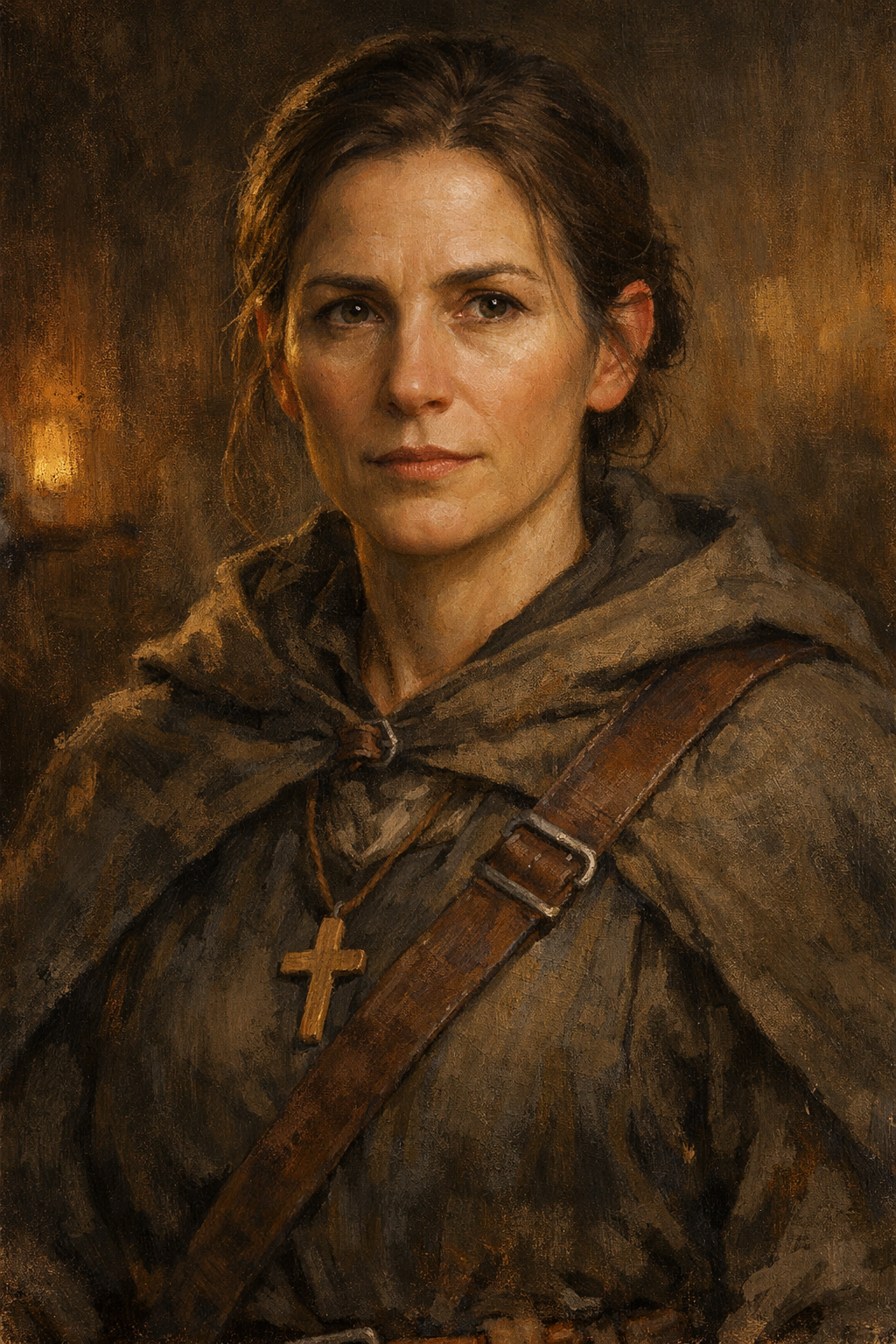
“I am not one of his priests, if that is what you’re asking. Not formally. But I know his church. I have worked beside clergy of St. Cuthbert before. Sometimes comfortably. Sometimes not.”
She glanced toward the dark window, where only a dim reflection of lanternlight remained.
“He is a god of common sense, duty, truth, and the hard correction of wrongdoing. Not gentle mercy first. Not mystery. Not beauty. Not compromise for its own sake. There is much in that I respect.”
A beat later she added, “There is also much in his worship that can become pride if the wrong sort of person carries it. Certainty is useful. It is also dangerous when loved too much.”
It was the longest thing Bramble had heard her say at once.
“I serve the good in people where I can preserve it,” she continued. “I stand against what preys on the helpless. I do not require a god of cudgels and rebukes to tell me those things matter. But in dark times, a church that believes evil should be struck down rather than endlessly debated can be useful.”
From the table, Corvin was pretending not to listen with such obvious effort that it became its own sort of listening.
Meret ignored him.
“If the church in Hommlet is worthy, we may find allies there. If it is rigid, proud, or more interested in authority than truth, then we will know that too.”
Bramble nodded. “That is more than good enough for me. Glad you’re here. After you.”
She studied him for a moment, perhaps to see whether he meant it lightly. Whatever she found seemed to satisfy her.
“And I am glad,” she said, “that you ask before assuming.”
That was nearly warmth.
“Sleep lightly. New villages are like deep water. Calm surfaces tell you very little.”
Then she went upstairs.
The dormitory was plain but respectable, all narrow beds, wool blankets, shuttered windows, and old wood. Garric checked the door and windows before he lay down. Meret offered a brief prayer over no one’s head but her own. Corvin took an irritatingly long time arranging his gear so no one could “accidentally” step on a book.
Bramble found his bunk, his gear, and the places his hands could reach in the dark.
Nothing interrupted the night.